A Fresh Take on the Classic SWOT Analysis
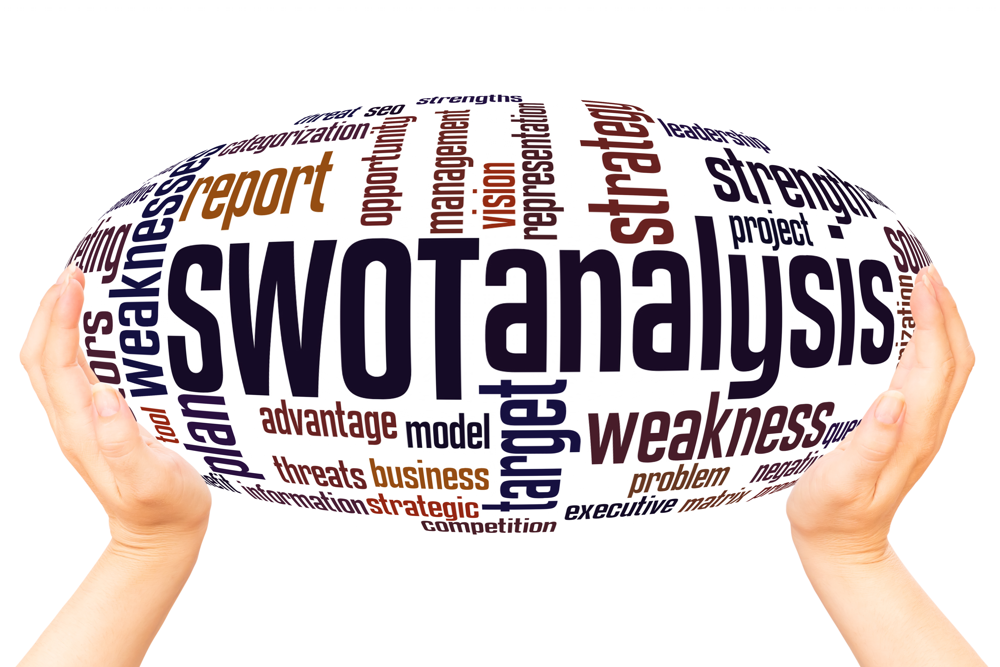
In every life decision, big or small, you weigh the pros and cons, the advantages and disadvantages. Should we eat at this restaurant? Well, the food is good, but they’re always blasting terrible music at 100dB. Should we buy this car? It’s comfortable and gets decent gas mileage, but people who own one say it’s always in the shop for repairs. But a simple list of pros and cons is often a little too simple, a little too static. Most real-world problems, especially in business, are dynamic. Decisions should be based not only on where you are now, but where you expect to be in the future. To make a good choice, you have to extrapolate the future consequences of that choice.
Enter the SWOT analysis. This business school staple has solidified its place in strategic decision-making because it’s a proven, useful tool for mapping out the lay of the land. The plane doesn’t take off without a flight plan, the ship doesn’t sail without its route charted, and your business can’t begin its growth journey without a roadmap of its own. Analyzing the Strengths and Weaknesses of your current position and the Opportunities and Threats you might face along the way is one of the first steps to creating that roadmap.
The traditional way of doing a SWOT analysis, however, isn’t perfect. One common criticism is that its focus on external factors leads to reactive strategy. That is, instead of focusing on what you’re good at and what unique value you bring to customers, you might end up fixated on defending yourself against possible external threats and too busy nullifying fears you can’t control instead of building on your strengths and working toward your goals.
That’s why our SWOT analysis is a little different. Rather than looking to the broader business environment or market for opportunities and weaknesses, we keep the attention focused on your business. We use the SWOT analysis to go deeper, conducting a separate analysis for each part of your business, from operations to staffing to product development and beyond.
Strengths are things your business does well. Having experts in the right role, high levels of customer satisfaction, great customer service, an innovative product development team, might all be strengths you identify in different departments. Strengths should be relevant to where you are right now. If they are areas of competence you aren’t using now but might in the future, they should be listed as Opportunities.
Weaknesses are gaps in skills, knowledge, training, staffing, or any other current problems that are holding you back. You might be currently understaffed in a particular department, or your software might be outdated, or you are at capacity and don’t have any room to grow.
Opportunities are skills or capacities that exist in your team but are currently underutilized. Maybe you have a much higher manufacturing capacity than you are currently using, or you have a metalsmith on staff who has experience with platinum alloys that will let you expand beyond your current lines of gold and silver products. Your untapped potential is an Opportunity.
Threats are risks that could disrupt parts of your business if not addressed. You might be depending too heavily on the knowledge of a single person. You might have learned a particular skill decades ago, but new, more efficient methods have since supplanted the old ones. The same goes for outdated technology or processes. The traditional SWOT analysis finds threats outside of your business, but you can plan a stronger strategy with clearer, more actionable goals if you keep your focus within.
The differences between Weaknesses and Threats might not be all that clear at first. In analyzing your Weaknesses, you ask, “What are the problems holding me back right now? A Threat, on the other hand, might not be affecting you right now, but that Threat will begin to loom larger and cause problems as time passes. You might have one employee who knows your ERP system inside and out. Having someone who knows all the nuances of such a complex piece of software is a Strength, but if they haven’t documented that knowledge to share with others, their departure from the company would be a major Threat.
A Specialist Diagnosis for Every System
To create strategy that gets everyone working toward the same goals, use this SWOT analysis for each area of business. A generic company-wide SWOT analysis is going to be too general to let you accurately identify the strengths and weaknesses of your business. It’s the difference between going for an annual physical and going to see an ENT, a gastroenterologist, a dermatologist, a nutritionist, an immunologist, a cardiologist, and an endocrinologist and then bringing all of those specialist findings together to craft a comprehensive, personalized health plan. While that GP can give you a lot of useful feedback, you can get even more insight by focusing on each system individually and building an accurate big picture out of the important details.
Andrea Hill's
Latest Book
Straight Talk
The No-Nonsense Guide to Strategic AI Adoption
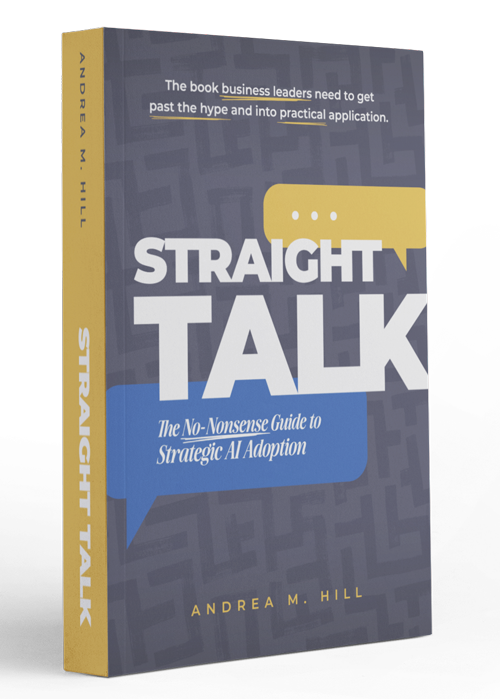
Where other books focus on prompts and tools, this book gives business leaders what they actually need: the frameworks and confidence to lead AI adoption responsibly, without having to become technologists themselves.